

If you have done any reading about investing, you have probably heard both names mentioned: John Bogle and Benjamin Graham. Both wrote books that genuinely changed how millions of people think about money. Both are considered required reading by serious investors. But if you are just starting out, sitting down with one of them for the first time, you will notice very quickly that they are not the same kind of book at all.
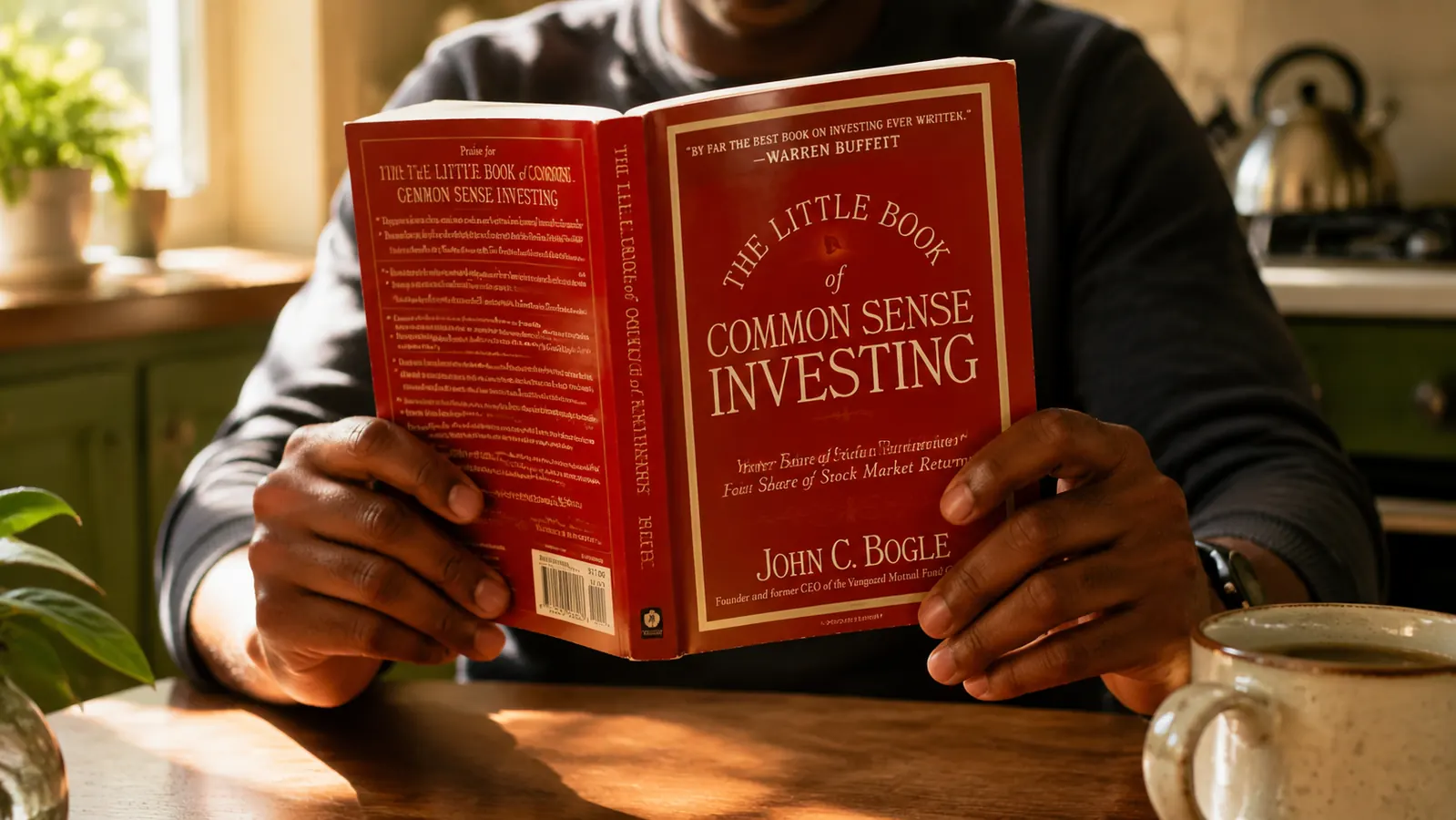
I read Bogle's The Little Book of Common Sense Investing first. It took me about three evenings. Two weeks later, I opened an account and put my first $500 into a total market index fund. Then I went back and read Graham's The Intelligent Investor. I spent six weeks on it, took two pages of notes, and closed it feeling like I had studied for a final exam. Both books are worth reading. But if you are asking which one helps a beginner actually get started, the answer is not even close.
| Little Book of Common Sense Investing | The Intelligent Investor | |
|---|---|---|
| Page Count | 216 pages (10th Anniversary Edition) | 623 pages (Revised Edition with commentary) |
| Core Strategy | Buy low-cost total market index funds and hold them forever | Value investing: find underpriced stocks through fundamental analysis |
| Ideal Reader | First-time investor or anyone who wants a simple, hands-off approach | Motivated reader willing to study financial statements and business valuations |
| Time to Apply | Most readers open an index fund account within days of finishing | Requires months of practice with stock screening before acting confidently |
| Reading Difficulty | Plain language, short chapters, no jargon assumed | Dense prose, financial terminology throughout, benefits from rereading |
| Original Publication | 2007 (updated 2017) | 1949 (revised 1973; Jason Zweig commentary added 2003) |
| Who Recommends It | Warren Buffett, financial planners, index-fund community | Warren Buffett, value investors, CFA candidates, finance academics |
| Requires Stock Research | No. The whole point is you do not pick individual stocks | Yes. Graham's method depends on reading annual reports and balance sheets |
| Amazon Rating (as of 2026) | 4.7 stars, 11,461+ reviews | 4.7 stars, 50,000+ reviews |
Where The Little Book of Common Sense Investing Wins
Bogle's central argument fits on a single index card: most investors, professional and amateur alike, fail to beat a simple index fund over time because of fees, trading costs, and the tendency to react to short-term noise. His solution is to stop trying to beat the market and just own the whole thing through a low-cost fund. That is it. The rest of the book is evidence, examples, and reassurance that this is not lazy, it is smart.
What makes this book win for beginners is that it removes the pressure to be clever. You do not need to read earnings reports. You do not need to time anything. You open a brokerage account, set up automatic contributions to a total market index fund, and leave it alone for years. I did exactly that after reading it. My first contribution was $50 from my checking account on a Tuesday morning. That is how low the barrier is once you understand the argument Bogle makes.
Where The Intelligent Investor Wins
Graham's book is the foundation of value investing, which is the approach Warren Buffett credits for his entire career. If you want to understand how to evaluate whether a company is trading below its intrinsic worth, this is the book. There is nothing quite like it for learning the difference between investing and speculation, or for building the kind of patience and discipline that serious long-term investors need. Graham's concept of Mr. Market, the irrational business partner who swings between panic and euphoria, is one of the most useful mental models in all of personal finance.
The Intelligent Investor also holds up as a companion to the Bogle book for people who want to understand why index funds work so well. Reading Graham helps you appreciate how hard it is to find genuinely mispriced stocks consistently. After spending time with it, the case for passive investing actually gets stronger, not weaker. If you are the kind of person who wants to understand the full picture before committing to a strategy, Graham gives you the intellectual groundwork that Bogle builds on.
Ready to stop waiting and put your first dollars to work? Bogle's book gets you there in a weekend.
The Little Book of Common Sense Investing by John C. Bogle is the most direct path from confused beginner to confident index fund investor. It has a 4.7-star rating from over 11,000 readers and takes less than a week to finish.
Amazon Check Today's Price on Amazon →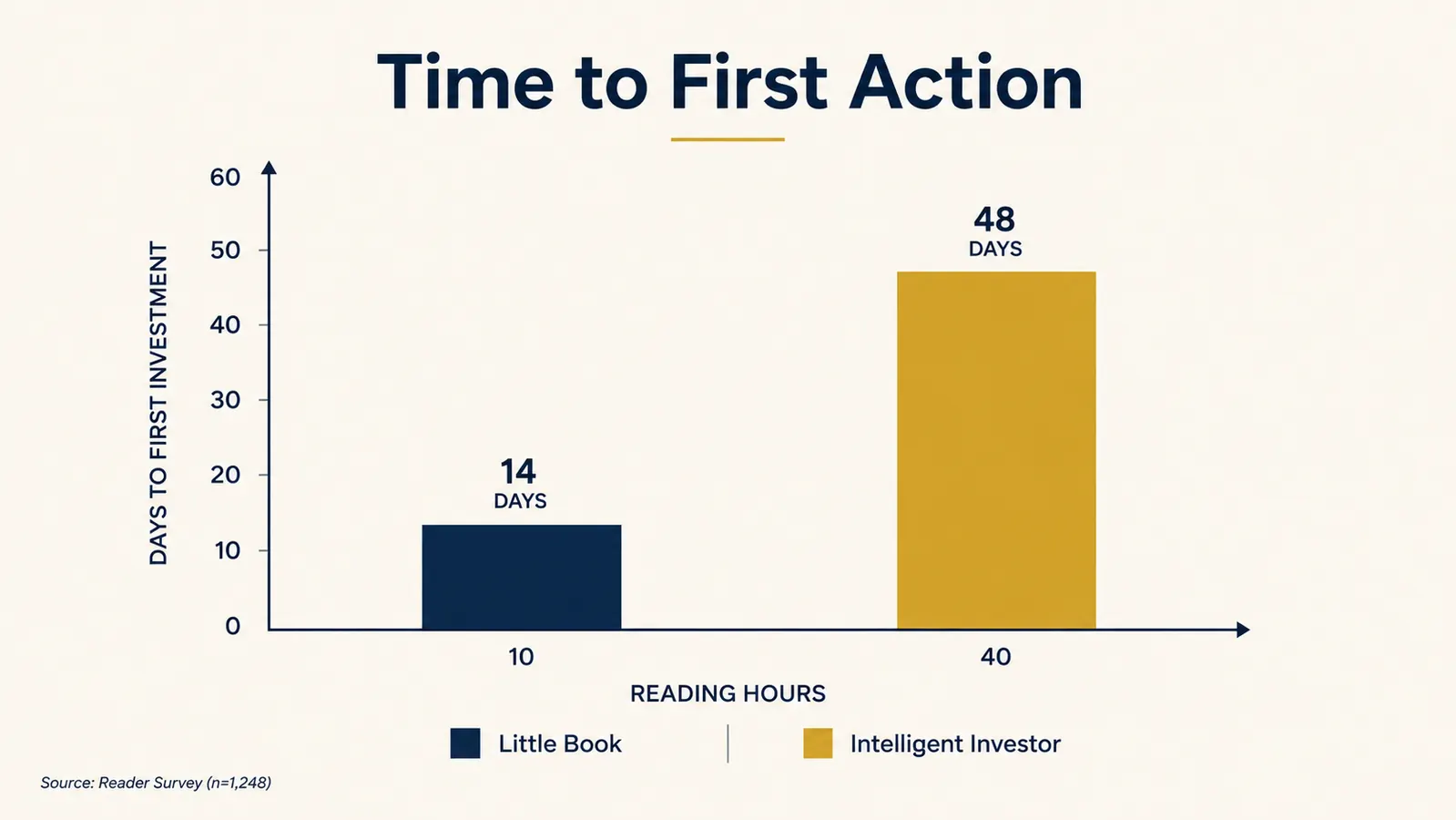
Who Should Buy Which
If you have not invested a single dollar yet, start with The Little Book of Common Sense Investing. The goal right now is not to become a financial expert. The goal is to start. Bogle's book strips away every excuse and hands you a clear, defensible plan in about three evenings of reading. If you are already contributing to a 401k or have opened a brokerage account and want to go deeper, then pick up The Intelligent Investor. It rewards effort and patience, but it is not the place to start when you are still figuring out the difference between a stock and a bond.
The goal right now is not to become a financial expert. The goal is to start. Bogle's book strips away every excuse and hands you a plan you can act on this week.
A Few Things Worth Knowing Before You Decide
The Intelligent Investor was written in 1949 and updated in 1973. The core principles hold up remarkably well, but some of the specific examples and valuation benchmarks feel dated. The 2003 revised edition adds commentary from Jason Zweig that helps bridge the gap, but you still need to do some translation work to apply Graham's ideas to today's market. Bogle's book, by contrast, is straightforwardly modern. The specific funds he discusses and the fee data he cites reflect the current investing landscape.
Neither book tells you what to do with debt before you invest. Neither covers budgeting, emergency funds, or the mechanics of opening an account. They are both investing books, not complete personal finance books. If you are still working on getting your spending under control or building a starter emergency fund, you might want to pair either book with something like the Total Money Makeover first. But once you are ready to invest, Bogle's book is where I would point anyone sitting at my kitchen table.

What I Would Tell a Friend Choosing Between the Two
My neighbor Teresa asked me this exact question last spring. She is 34, works in a school district office, and had been putting off investing for three years because she felt like she did not understand it well enough. I told her to read Bogle first, take notes on one page, then go open an account with whatever she could spare that month. She put in $75. She has added to it every month since. She has not read Graham yet. She might someday. But the Bogle book did what it needed to do: it got her moving.
The Intelligent Investor is a masterwork that serious investors should eventually read. But if you are comparing these two and asking which one to buy today, the Little Book of Common Sense Investing is the right answer for most of the people reading this page. It is shorter, clearer, and built around a strategy that requires no ongoing expertise to execute. You read it, you understand it, and then you go do it.
Three evenings of reading. One account opened. That is the Bogle roadmap for a beginner.
The Little Book of Common Sense Investing by John C. Bogle walks you through exactly why index funds work and how to use them, with no financial background required. Over 11,000 readers rated it 4.7 stars.
Amazon Check Today's Price on Amazon →Internal Resources Worth Reading Next
If you want a longer look at how the Little Book holds up in practice over time, read our full long-term review at little-book-common-sense-investing-review-long-term. If you are ready to take the next step and actually open your first index fund account, our plain-English walkthrough at how-to-start-investing-with-index-funds-for-beginners covers every step from choosing a brokerage to making your first contribution.