

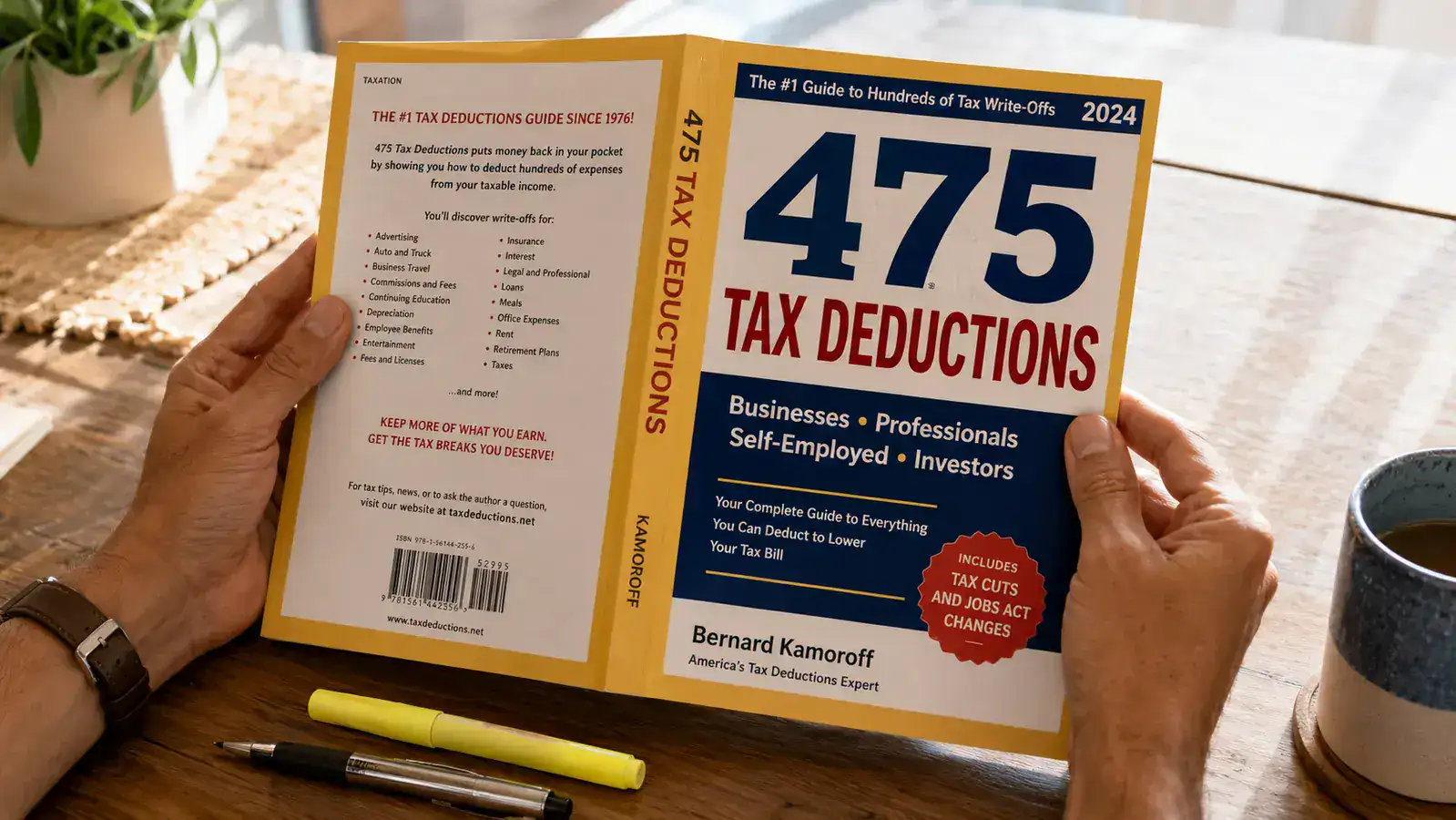
Three years ago I started picking up freelance writing projects on the side. Nothing dramatic, maybe a few hundred dollars a month at first. But when April rolled around, I realized I had no idea what I was actually allowed to deduct. My tax software asked me questions and I answered them, but I kept feeling like I was probably leaving something on the table. A friend who does bookkeeping for small businesses mentioned the 475 Tax Deductions book by Bernard B. Kamoroff and said it was the first thing she recommended to every new self-employed person she worked with. I ordered it, and I have used it during three consecutive tax seasons since.
This review is not going to promise you a specific dollar figure or guarantee your tax bill goes down. I am not an accountant and neither is this book, frankly. What I can tell you is what I actually found when I sat down with it, how I used it alongside my tax software, and the kinds of things I had simply not thought to look for before.
The Quick Verdict
A dense, practical A-to-Z reference for freelancers and self-employed people who want to understand what they can legally deduct before they file. Not a replacement for a CPA, but a genuinely useful companion to any tax software.
Amazon Check Today's Price →Your tax software guides you through questions. This book tells you what questions to ask in the first place.
The 475 Tax Deductions book by Bernard Kamoroff has a 4.7-star rating from over 1,300 buyers, most of them freelancers, gig workers, and small business owners. If you have any self-employment income at all, it is worth checking the current price.
Amazon Check Today's Price on Amazon →How I Have Used It Over Three Tax Seasons
My system is pretty simple. A few weeks before I sit down to actually file, I open the book to the table of contents and skim through the letter-by-letter index at the back. For every category that could plausibly apply to my situation, I fold the corner of the page and go back later with a highlighter. That takes maybe an hour the first time you do it, and about thirty minutes each year after that because your situation does not change dramatically from one year to the next.
The book is organized alphabetically, which sounds obvious but is actually a deliberate choice on Kamoroff's part. It means you do not have to read it cover to cover. You look up what you spend money on, you read the relevant entry, and you find out whether it qualifies, what the limits are, and what records you need. That is pretty much it. For most people doing freelance or side hustle work, the book functions as a checklist and a vocabulary builder more than anything else.
After three years, my copy looks fairly well-used. There are sticky tabs on maybe twenty pages. Some of those pages cover things that turned out not to apply to me, but knowing that is valuable in itself. A lot of people spend mental energy wondering if something counts. This book lets you settle the question quickly and move on.
The Sections That Actually Surprised Me
The home office section was the first place I spent real time. I work from a dedicated spare bedroom about four days a week. Kamoroff walks through the two IRS methods for calculating a home office deduction, the simplified method and the actual expense method, and explains the trade-offs in plain English. My tax software asked me about home office use, but it did not explain which calculation method would produce a better result for my particular situation. The book does.
The entries covering business use of a vehicle surprised me a little too. I drive to client meetings occasionally, and I had been tracking mileage loosely in my phone's notes app without really understanding how to document it properly. The book spells out the record-keeping requirement: date, destination, business purpose, and miles driven. That is not a big revelation, but seeing it written out clearly motivated me to actually keep a proper mileage log. I started using a simple spreadsheet after reading that section.
There is also a section on education and professional development expenses that I had completely ignored before. If you take a course, attend a conference, or buy books, software, or subscriptions related to the work you do for income, those can often be deducted. I had been buying things I needed for my freelance work and just absorbing the cost without thinking about it. Going through those pages gave me a reason to keep better receipts going forward.
Where the Book Falls Short
The biggest limitation is currency. Tax law changes, and a printed book cannot update itself. The edition I bought was current enough for my purposes, but you should check the copyright year before you order. Kamoroff puts out new editions periodically, so make sure you are buying a recent one. If the edition on the shelf is three or four years old, some of the dollar limits and rules in the book may have changed. The concepts and categories will still be largely accurate, but the specific numbers warrant independent verification.
The book also assumes a fairly basic level of organization on your part. If you have not been keeping any receipts or tracking your expenses through the year, the book will show you what you should have been tracking but cannot recover records you no longer have. This is not a criticism of the book so much as a note about timing: it is more useful if you read it in October or November than in March, so you can actually capture the records it tells you to keep.
And it does not cover the W-2 side of your finances at all. If your main income is from an employer and you have no self-employment income, most of this book will not apply to you. It is written specifically for people with Schedule C income, meaning freelance, gig work, consulting, or small business activity. That is made clear in the title, but it is worth stating plainly.
My tax software asked me questions and I answered them. The book showed me what questions I should have been asking on my own.
What the 4.7-Star Rating Actually Reflects
With over 1,300 ratings averaging 4.7 stars, this is a book that earns its reputation quietly. It does not have a flashy premise or a celebrity author. Kamoroff has been a CPA for decades, and the writing reflects that. It is matter-of-fact, organized, and free of the kind of vague encouragement you find in most personal finance books. There are no inspiring stories about someone who paid zero dollars in taxes. There are entries, explanations, and the relevant IRS code references if you want to dig deeper.
The reviews that praise it most come from people who had a specific deduction question, looked it up, and got a clear answer. The reviews that are lukewarm come mostly from people who expected it to automatically save them money without any effort on their part. The book is a reference tool, not an accountant. Used correctly, it helps you have more informed conversations with your tax preparer and catch things you might have otherwise overlooked.
What I Liked
- Alphabetical format makes it easy to look up specific expenses quickly
- Plain English explanations with IRS code citations for those who want them
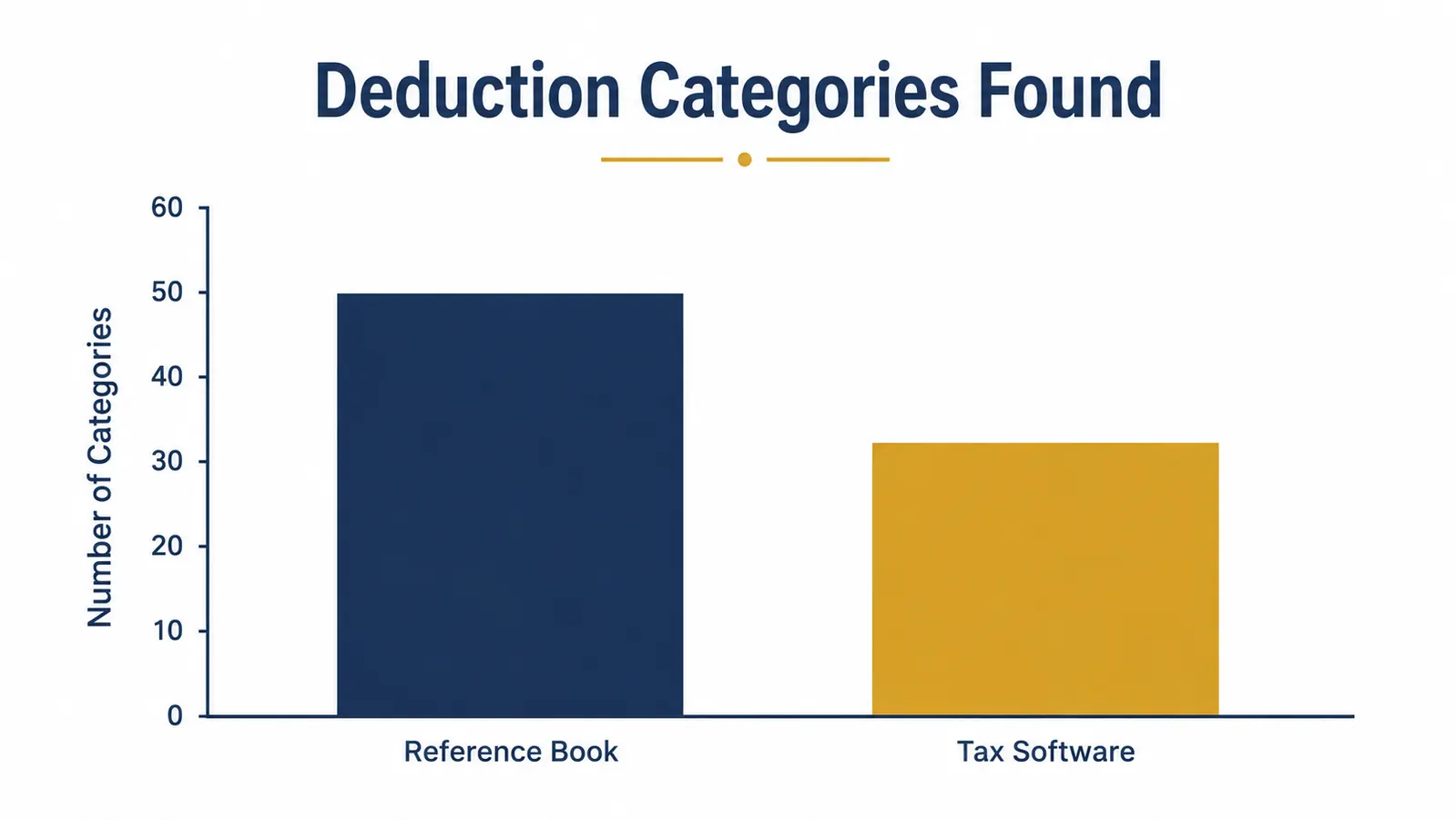
- Covers categories that most tax software glosses over or skips entirely
- Useful for building the habit of better record-keeping throughout the year
- Works well alongside tax software rather than replacing it
- Highly regarded by freelancers, gig workers, and solo business owners
- Compact enough to sit on a desk and be consulted throughout the year
Where It Falls Short
- Printed book cannot update with tax law changes between editions
- Only useful if you have self-employment or business income on Schedule C
- Does not replace a CPA for complex situations or audit support
- Most valuable when used before filing season, not during it
- No digital or searchable version included with purchase
How It Compares to Just Using Tax Software
If you want a fuller look at how this book stacks up against tools like H&R Block software, I wrote a separate piece covering exactly that. You can read the comparison here: 475 Tax Deductions vs H&R Block Software. The short version is that they serve different purposes. Software guides you through the filing process. The book helps you understand what you qualify for before you start filling anything in. Both have a role.
If you are curious which specific deductions most people overlook, I also put together a list based on what I found most useful in the book: 10 Tax Deductions Most People Miss. That piece pulls from the book's content and from conversations with other freelancers about what surprised them most.

Who This Book Is For
If any of the following describes you, I think the 475 Tax Deductions book is worth picking up. You do freelance work, even occasionally. You drive for a rideshare or delivery app. You have a side hustle that brings in any income at all, whether it is selling on Etsy, doing odd jobs, or consulting in your field. You recently started a small business or are thinking about it. You work for yourself full-time. Any situation where you file a Schedule C and feel like you might be missing something, this book is built for that.
The ideal reader picks it up in the fall, reads through the categories that match their spending, starts keeping better records, and then opens it again in January or February when they begin preparing to file. Used that way, it functions as a prep tool and a checklist rather than a last-minute rescue.
Who Should Skip It
If your only income comes from a W-2 employer and you have no freelance, gig, or business income of any kind, most of this book will not apply to your situation. The home ownership deductions, the medical expense thresholds, and a handful of investment-related entries may be relevant, but the bulk of the 475 entries are written for self-employed people. You would get limited use from it and might feel like you overpaid for what you actually needed.
Similarly, if your tax situation is genuinely complex, meaning you have multiple business entities, significant investment income, or any kind of audit history, this book should not be your primary resource. It can supplement what your CPA tells you, but at that level of complexity you really do need a qualified professional reviewing your return, not a reference book.
Three tax seasons in, I still open this book before I start filing. It earns its shelf space every year.
The 475 Tax Deductions book by Bernard B. Kamoroff has a 4.7-star rating from more than 1,300 reviewers. It is the kind of reference tool that pays for itself the first time you find a legitimate deduction you would have otherwise missed. Check the current edition and today's price on Amazon.
Amazon Check Today's Price on Amazon →