

I want to give you a straight answer before you spend another minute wondering: these two products are not really competing with each other. The 475 Tax Deductions for Businesses and Self-Employed Individuals book by Bernard Kamoroff is a reference guide that teaches you which expenses you legally qualify to deduct. H&R Block tax software is a filing tool that walks you through submitting your return. One fills the knowledge gap. The other handles the paperwork. If you only have budget for one right now, the choice depends entirely on where your biggest tax leak is.
Most people I talk to assume that buying better filing software will automatically get them a bigger refund. That assumption is where a lot of money gets left on the table every April. If you do not know a deduction exists, no software in the world will prompt you to take it. That is the core problem the 475 Tax Deductions book solves, and it is the reason I give it the edge in this comparison for anyone who is self-employed, runs a side gig, or has any business-related expenses in their life.
| 475 Tax Deductions Book | H&R Block Software | |
|---|---|---|
| Primary purpose | Teach you what deductions you legally qualify for | Guide you through filing your tax return correctly |
| Best for | Freelancers, gig workers, small business owners, anyone with self-employment income | W-2 employees with straightforward returns or anyone who wants filing guidance |
| Format | Printed A-to-Z reference book, 254 pages | Desktop software or online platform with guided interview flow |
| Deduction knowledge | 475 specific deductions explained with eligibility rules and IRS citations | Asks about common deductions during interview; does not teach rules behind them |
| Home office guidance | Dedicated chapter covering both simplified and regular method, with specific calculation examples | Prompts you to enter home office square footage if you know to claim it |
| Mileage and vehicle deductions | Full breakdown of business, medical, moving, and charitable mileage rules with recordkeeping advice | Entry field for mileage totals; no guidance on which miles qualify |
| Ongoing use | Readable year-round; useful for planning, not just filing season | Used primarily during tax filing season each year |
| Amazon availability | Available on Amazon with current pricing | Not linked (comparison reference only) |
| Learning curve | Low; written in plain English, organized alphabetically so you can look up exactly what you need | Very low for basic returns; more complex for self-employment schedules |
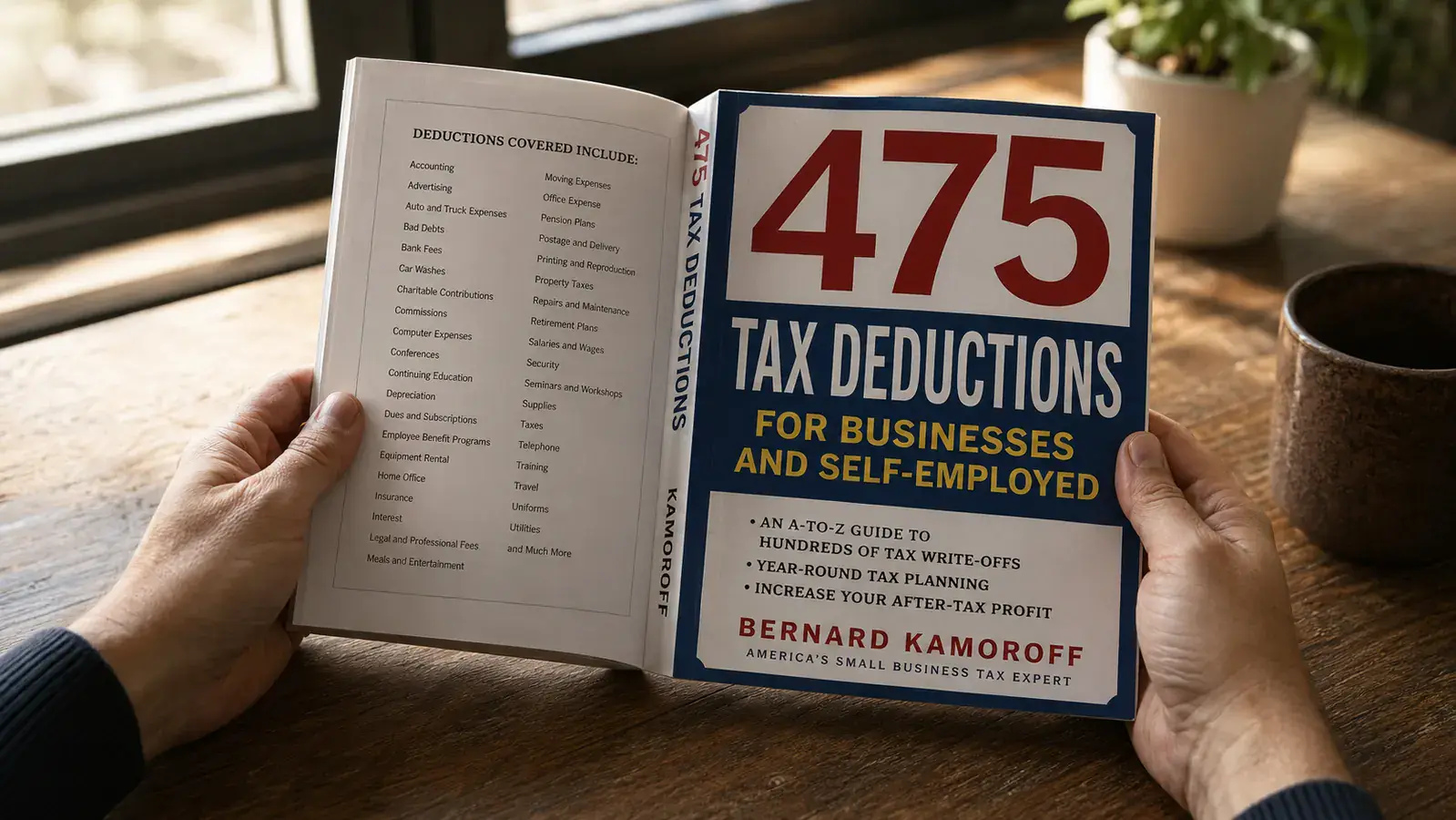
Where the 475 Tax Deductions Book Wins
The book wins on deduction discovery. I went through it the first time with a highlighter and found seven categories I had never claimed before, including a portion of my cell phone bill, a home office deduction I thought I did not qualify for, and professional development costs I had been writing off incorrectly. None of those showed up as prompts in any filing software I had used before, because software cannot ask about what it does not know you have.
It also wins on clarity. Each entry in the book explains what the deduction covers, who qualifies, what records the IRS expects you to keep, and where it goes on your return. That kind of context is missing from a software interview. When a software tool asks whether you have any 'other business expenses,' it is hoping you already know what belongs there. Kamoroff spells it out for you. For a freelancer, a rideshare driver, a craft seller on Etsy, or anyone running a one-person operation, that knowledge is worth more than any software feature.
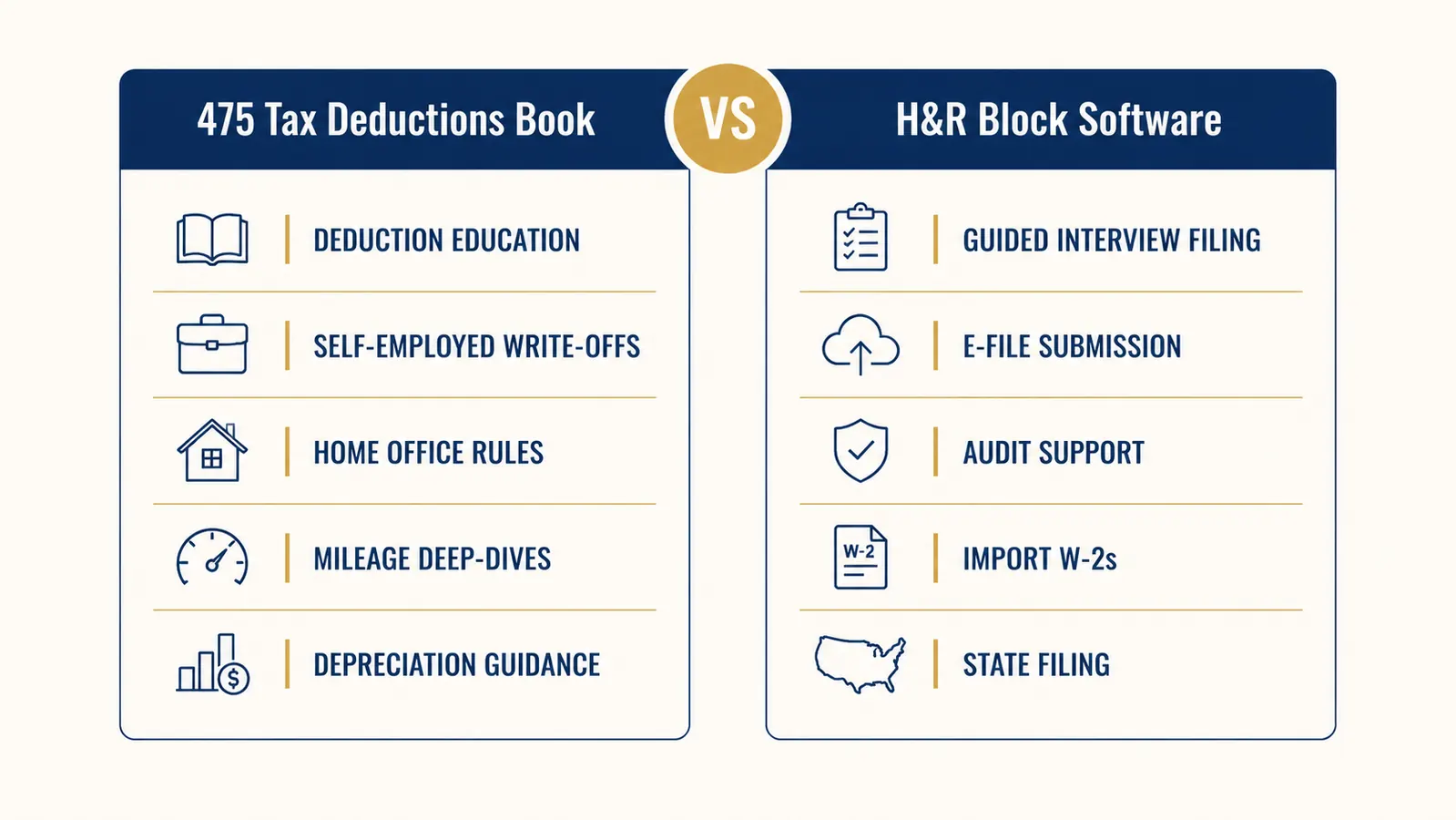
Where H&R Block Software Wins
H&R Block software wins on the filing side, and that is not a small thing. If you have a W-2 job with no side income and your deductions are simple, the guided interview format is genuinely convenient. It handles the math, checks for common errors, imports your W-2 electronically in some cases, and gets your return submitted without you needing to touch an IRS form directly. For that use case, a reference book would add zero value to your process.
The software also gives you audit support and accuracy guarantees that a book obviously cannot. If the IRS flags your return, H&R Block has a process for standing behind what their software recommended. That peace of mind matters to a lot of people, especially if this is your first year filing something more complicated than a single W-2. The software is also updated every year to reflect current tax law, whereas you need to check that the edition of the Kamoroff book you are reading reflects the current tax code.
If you have any self-employment income this year, start with the book that teaches you what you can actually deduct.
The 475 Tax Deductions book by Bernard Kamoroff has a 4.7 rating from over 1,300 verified buyers. It is the reference guide freelancers, gig workers, and small business owners use to find deductions before they file, not after.
Amazon Check Today's Price on Amazon →
Who Should Buy Which
Buy the 475 Tax Deductions book if you have any self-employment income, gig work, freelance income, or a side business, no matter how small. If you drove for DoorDash three weekends, sold handmade items online, or did consulting work on top of a regular job, this book will pay for itself many times over in deductions you would have otherwise skipped. It is also the right choice if you already use a CPA or enrolled agent, because going into that appointment knowing which deductions to ask about makes the conversation much more productive. I have seen people add hundreds of dollars to their refund simply because they knew to bring up a home office or vehicle expense their preparer had not thought to ask about.
Buy H&R Block software, or something similar, if your tax situation is genuinely straightforward: one employer, standard deduction, no side income, no rental property, no freelance work. In that case, you do not need a deduction encyclopedia. You need a clean, accurate way to file. The software handles that well. If you have both needs, buy the book first, read it before filing season, make a list of every deduction that applies to you, then bring that list with you whether you use software or a professional.
Software can only ask about deductions you already know you have. The book teaches you which ones to look for in the first place.
There is one more thing worth saying here. A lot of people buy tax filing software and feel reassured that their taxes are handled. But filing correctly and filing completely are two different things. You can submit a technically correct return and still overpay by several hundred dollars because you did not know about a legitimate deduction. The 475 Tax Deductions book is the tool that closes that gap. It has been helping self-employed people and small business owners understand their write-offs since its first edition, and the current edition covers real situations, written in the kind of plain language that actually makes sense without a tax background.
For more detail on what the 475 Tax Deductions book covers across three full tax seasons of use, see my longer writeup at the link below. And if you want a practical guide to finding specific deductions as a freelancer or gig worker before you file, the how-to guide I wrote for that situation walks through the process step by step.
If you want a closer look before you decide, read our full 475 Tax Deductions book review on whether it is worth it for gig workers and freelancers.
And once you have the book, our guide on how to find hidden tax deductions as a freelancer or gig worker walks you through putting it to work.
Before you file this year, spend an hour with this book and a highlighter. Most readers find at least one deduction they had been missing.
The 475 Tax Deductions book covers 475 specific write-offs in plain English, organized A to Z. It is the reference guide your filing software assumes you already have.
Amazon Check Today's Price on Amazon →