

A friend texted me this question about six months ago: should I read Total Money Makeover or Psychology of Money first? She had $9,400 in credit card debt, a car payment she regretted, and a 401k she had not touched since she enrolled. I told her which one to start with, and I am going to tell you the same thing here. But first, let me actually explain what each book does, because they are solving two pretty different problems.
The Total Money Makeover by Dave Ramsey has been around since 2003 and has sold more than ten million copies. The Psychology of Money by Morgan Housel came out in 2020 and has sold more than four million. Both have 4.7 stars on Amazon with tens of thousands of reviews. On the surface they look similar: popular money books written for regular people. But they are built on completely different premises, and recommending one over the other is not that hard once you understand what each one is actually trying to do.
| Total Money Makeover | The Psychology of Money | |
|---|---|---|
| Author | Dave Ramsey | Morgan Housel |
| Core approach | A numbered 7-step plan (Baby Steps) for getting out of debt and building wealth | 19 short essays on the behavioral and emotional forces that drive money decisions |
| Best for | People carrying consumer debt who need a concrete action plan right now | People who want to understand why they keep making the same financial mistakes |
| Reading experience | Prescriptive and direct, sometimes preachy, high on urgency | Calm and reflective, story-driven, low on specific instructions |
| Investing advice | Recommends actively managed mutual funds with a 12% expected return, which many advisors dispute | Advocates for long time horizons, low-cost index funds, and behavioral patience |
| Debt philosophy | Pay off all non-mortgage debt before investing, using the snowball method (smallest balance first) | Does not prescribe a payoff order; focuses on the psychology of staying consistent |
| Takes a stance on credit cards | Yes, strongly: cut them up, do not use them, ever | No specific credit card position; focuses on mindset over rules |
| Audience fit | Paycheck-to-paycheck earners who need to stop the bleeding and start a plan | People who are already somewhat financially stable and want to think more clearly about long-term decisions |
| What it will not do for you | Will not teach you about investing, real estate, or taxes in any depth beyond the basics | Will not give you a step you can take this weekend to improve your finances |
Where The Total Money Makeover Wins
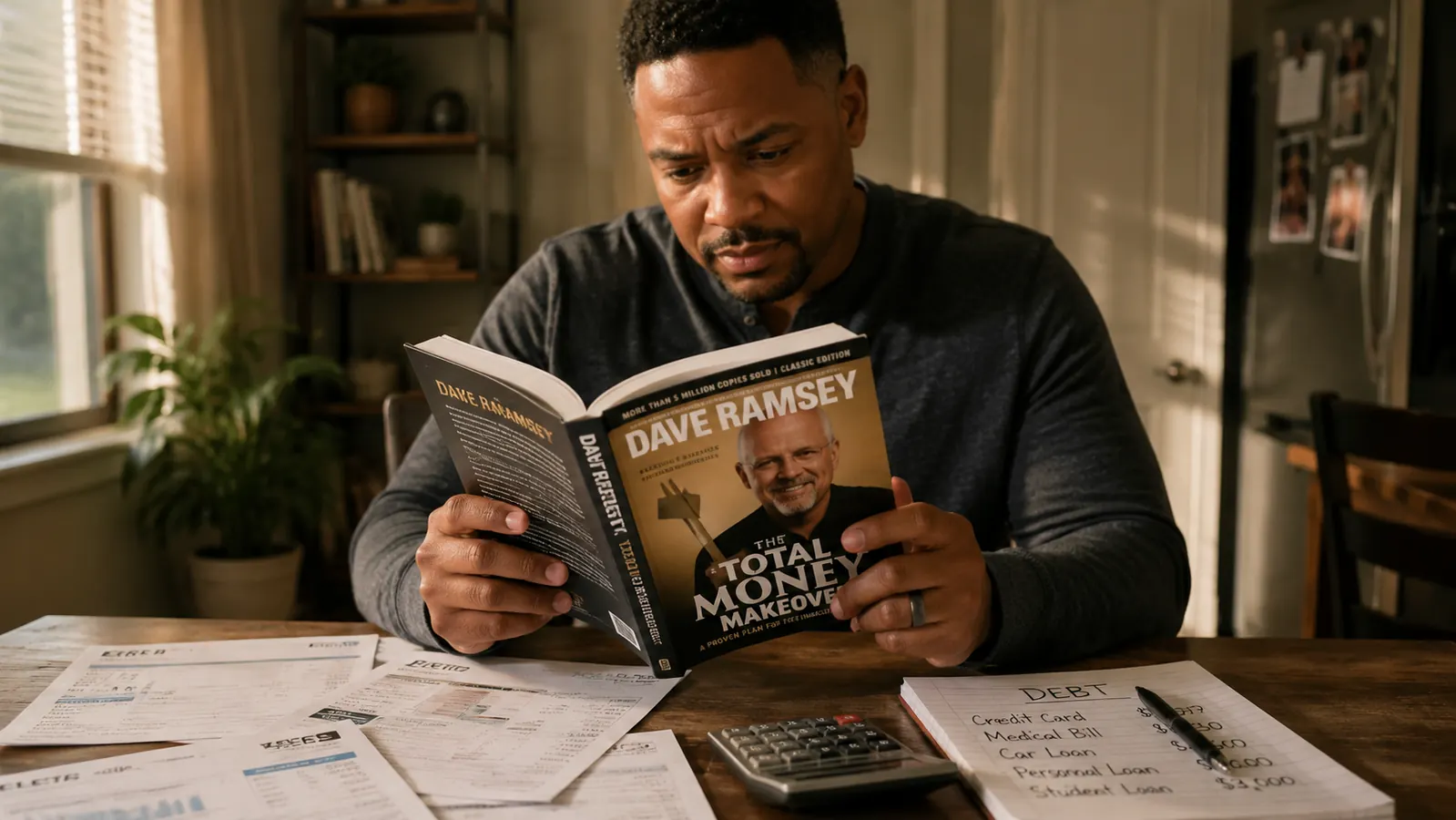
If you have debt, The Total Money Makeover is the more immediately useful book. Ramsey lays out seven numbered baby steps in an order that is deliberately sequenced: start a $1,000 emergency fund, list every debt from smallest to largest, attack the smallest one while paying minimums on the rest, then roll that payment into the next debt when the first one is gone. The math on this is not perfect, but the psychology is solid. Paying off a small debt quickly gives you a win you can feel, and that feeling makes it easier to stay on the plan.
The book is also honest about the emotional side of being in debt, which most personal finance books skip over. Ramsey writes about the shame, the denial, the fights with a spouse over money. That resonates with readers who have lived it. The testimonials scattered through the book are from real families with names and dollar amounts, not vague success stories. When someone says they paid off $52,000 in 29 months on a teacher's salary, that is a specific, believable claim. The book has over 22,000 reviews on Amazon with a 4.7-star rating, which tells you people are not just buying it, they are finishing it and acting on it.
Where The Psychology of Money Wins
The Psychology of Money wins on depth of thinking. Morgan Housel is a former Wall Street Journal columnist, and his writing is uncommonly clear for the finance world. He does not tell you to do anything, specifically. What he does instead is explain why people with high incomes still end up broke, why staying wealthy is harder than getting wealthy, why luck and risk are the same force wearing different hats, and why a long-term investing mindset is harder to maintain than any spreadsheet will tell you. These ideas stick with you.
If you are past the debt crisis stage and you are now trying to make better long-term investing decisions, this book will sharpen your thinking in ways Ramsey cannot. Housel's chapter on saving without a specific goal, where he argues that savings is a hedge against life's unpredictability rather than a fund for a known expense, is worth the price of the book by itself. The Psychology of Money is also a faster read. Most people finish it in a weekend.
If you have debt you are not dealing with yet, start here.
The Total Money Makeover has helped more than ten million people build a plan for getting out of debt, building an emergency fund, and finally feeling in control of money. It is the clearest numbered roadmap in personal finance for people who feel behind.
Amazon Check Today's Price on Amazon →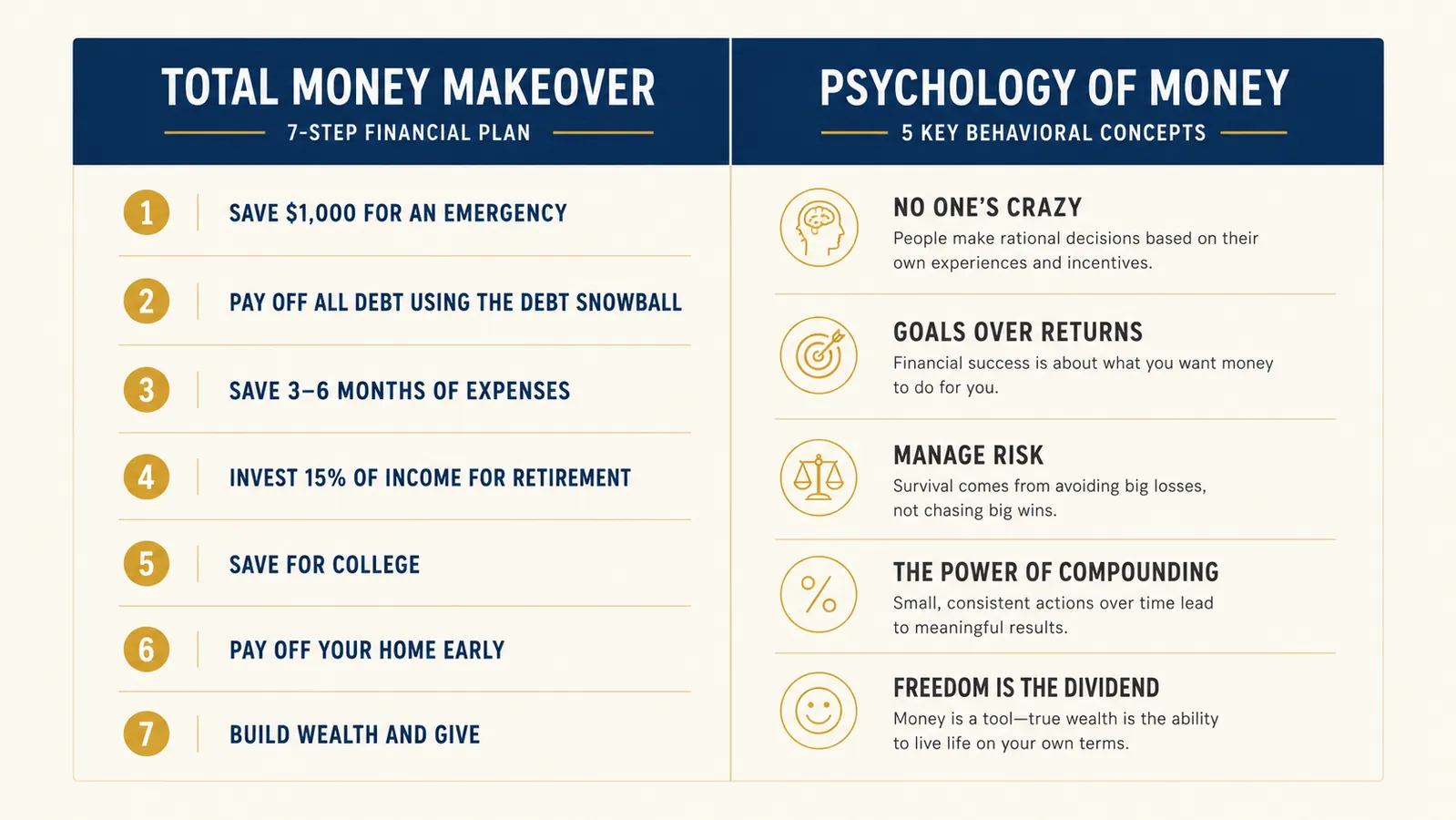
Who Should Buy Which
This is the answer I gave my friend. She had $9,400 in credit card debt. That is not a mindset problem, it is a mechanics problem. She needed a plan, not a framework for thinking about money differently. I told her to start with the Total Money Makeover, work through the first three baby steps, and then pick up the Psychology of Money once she had her first debt paid off. The sequence matters. Ramsey's book is for people in the middle of the problem. Housel's book is for people who are ready to think about money more clearly over the long term.
There is a version of this where you read Psychology of Money first and walk away feeling thoughtful and enlightened but with no specific idea of what to do on Monday. That is a common outcome for readers who pick it up while still carrying high-interest debt. It is a wonderful book. It is just not the tool for the job when you are drowning in minimum payments.
On the other hand, if you are already debt-free, have an emergency fund, and are trying to decide how to invest your first few thousand dollars without doing something stupid because of market noise, Psychology of Money is exactly the right read. It will make you a better, calmer, more rational long-term investor.
Ramsey's book is for people in the middle of the problem. Housel's book is for people ready to think more clearly about the long term. Most people need to read them in that order.

One Thing Each Book Gets Wrong
Ramsey's investing advice is the weakest part of the Total Money Makeover. He recommends actively managed mutual funds and assumes a 12% annual return, which is a number most financial planners consider optimistic to the point of being misleading. If you follow his plan on debt payoff and emergency funds, that is excellent advice. If you follow his investment chapter without reading anything else, you may end up in higher-fee funds than you need. That is worth knowing before you get to Baby Step 4.
Housel's weakness is the opposite. The Psychology of Money is almost entirely conceptual. It tells you what kind of investor to be without telling you how to get there. There is no mention of where to open an account, what account type to use, or how to actually buy an index fund. For a first-time investor, the book raises the right questions and then leaves you to Google the answers. That is a gap. Read it alongside something more instructional if you are just starting out.
My Honest Take After Reading Both
I have read both of these books twice. The Total Money Makeover is the one I have recommended more often, because most people who ask me about money books are asking because they feel stuck, not because they want to become better thinkers. They want to know what to do this month. Ramsey answers that question directly. I do not agree with every choice he makes, particularly the credit card stance and the mutual fund recommendations, but the core sequence of getting a small emergency fund in place, attacking debt in order, and building from there is genuinely sound advice for someone who has never had a financial plan.
The Psychology of Money is the book I have gotten more out of personally. I think about several of its ideas all the time, especially the chapter on how your own financial history shapes your behavior in ways that are hard to see. But I read it after I already had a handle on the basics. That sequencing made a big difference in how useful it was.
If I could only give someone one book to read, and that person was dealing with debt, I would hand them The Total Money Makeover without hesitation. If that same person had no debt and wanted to be smarter about building wealth over the next 20 years, I would hand them The Psychology of Money. If they had a weekend and the budget for two books, I would say read them both and start with Ramsey.
Ready to stop feeling stuck and start a real plan?
The Total Money Makeover gives you the clearest numbered roadmap in personal finance. Over 22,000 Amazon reviewers and a 4.7-star rating say this book moved the needle for real people in real debt. Check today's price and see what the updated edition covers.
Amazon Check Today's Price on Amazon →